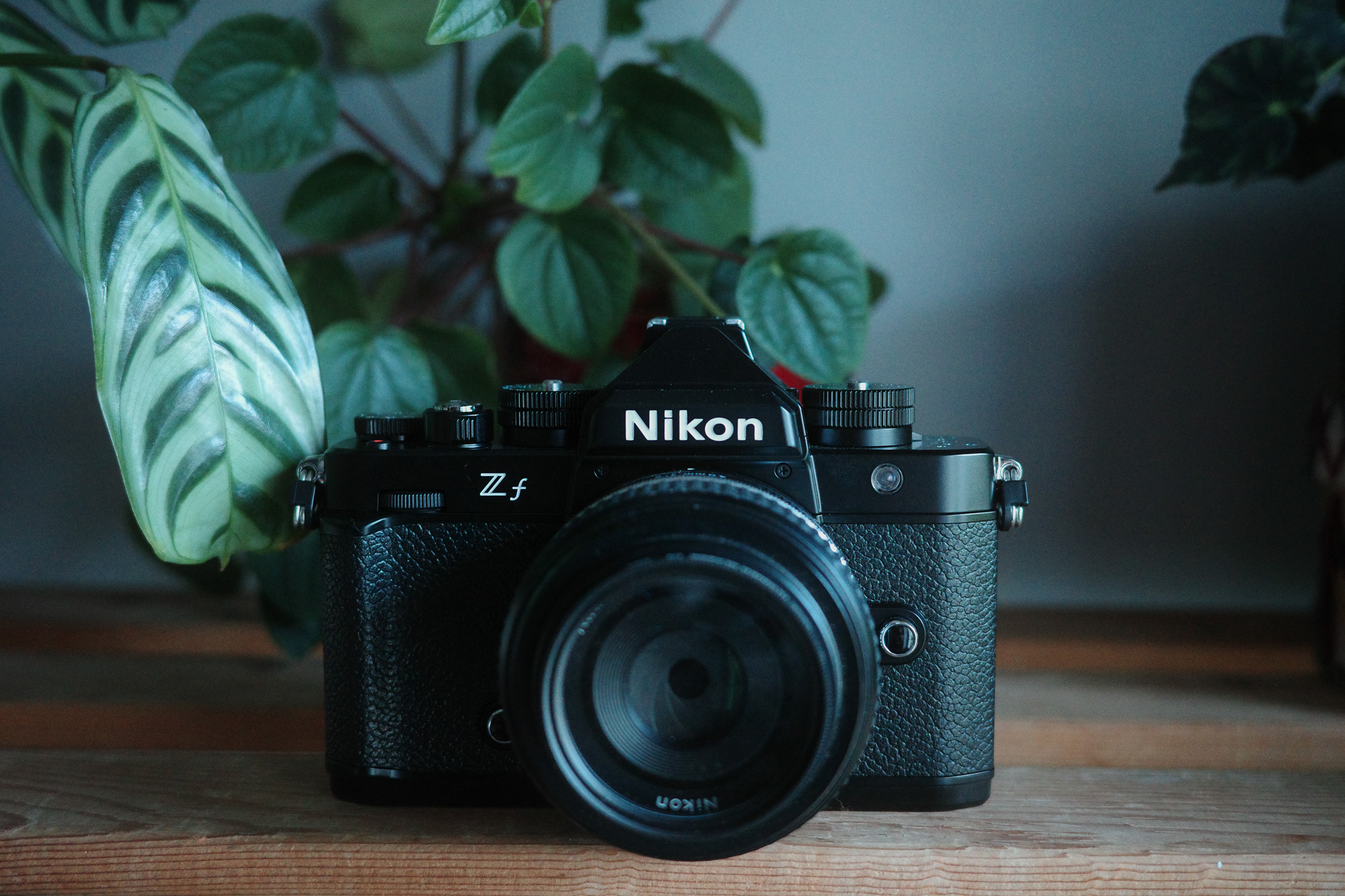
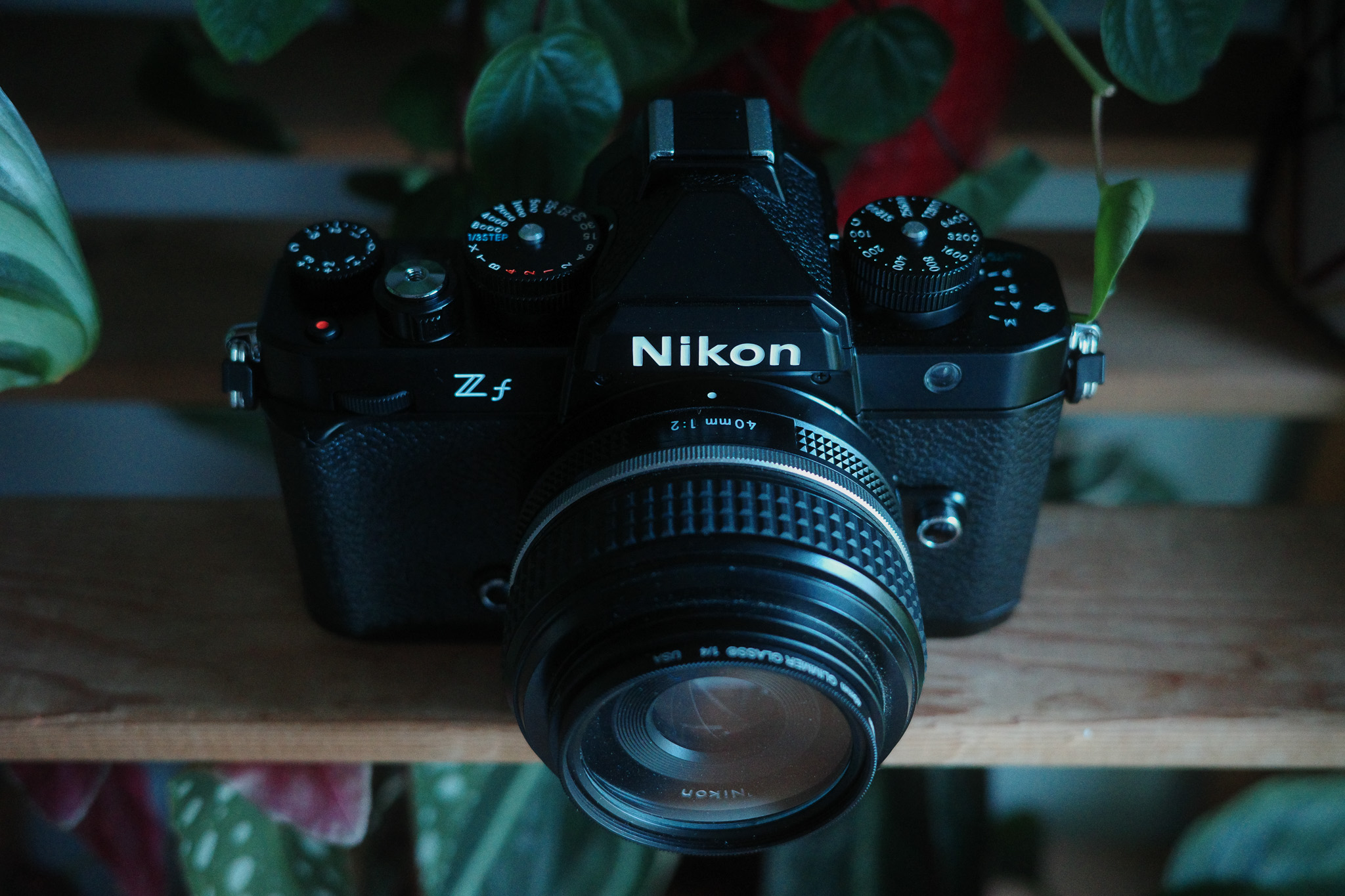

This is the result of a casual conversation with my friend João Almeida: up until then I had completely ignored the Nikon retro line of cameras – mostly because they’re not Fuji! 😛 – but his admittance that he felt tempted by the Zf led me to read more about it and quickly fall into the G.A.S. rabbit hole…
In all honesty I did not need a new camera at all as I am perfectly happy with my Fuji’s and Ricoh GRIIIx, but I figured that I could try it and resell it later at a good price if I don’t like it.
I haven’t had a chance to use it outside of the house yet, but here are some very quick first impressions:
- The build quality is amazing – I thought the X-Pro 3 was built like a tank, but this one is even sturdier! It is a quite large camera compare to all the Fuji’s I’ve owned so far, but doesn’t seem uncomfortably large, at least not from using it just around the house.
- Although it’s not particularly relevant for me, the auto-focus system is just on a totally different league than the Fuji’s. Subject detection and tracking works flawlessly, plus in manual focus you get a green focus confirmation box and this works even with manual lenses if you use the right adapter.
- I’m not a fan of the articulated screen and I think it might be an issue in real usage on the streets. One of my favorite features of the X-Pro3 is the flip down screen which makes it incredibly easy to use looking down. I wish Nikon would’ve chosen a similar solution for a camera that is so obviously retro-inspired, still time will tell how much of an issue it really is.
- I’m pleasantly surprised with the camera jpgs I’ve been able to get after just a few tweaks in the camera settings. Coming from Fujifilm and Ricoh, I didn’t expect much from the Nikon jpgs but I like the more neutral tones I’m getting SOOC. It is of course miles away in terms of the image customization from what we get in the Fujis, but with some minor adjustments in post I think I will be able to use the camera jpgs more often than not.
- I’m also positively surprised with the PASM dial which I thought I was going to hate! On my Fujis I shoot in Auto aperture and Auto shutter speed 90% of the time, I only change it when I either want to force a slow shutter speed or a shallow depth of field. For that I have to rotate either the aperture ring or the shutter speed dial all the way to the values I want, which always takes a bit of time. With the PASM dial on the Zf, I can have a slow shutter speed and a wide aperture pre-set on the dials and the camera will ignore them while I’m in P mode, but as soon as I switch to S or A mode it will use whatever values I have set.
I’ll share more of my findings in the future as I put the camera through its paces on the streets.
 Life, Unintended
as a Ricoh GRiii owner with Fujifilm envy I was intrigued by this post – I love the blue tones of the photos – obviously not self shot but under the eye of the Fuji!
LikeLiked by 1 person
Then you will be happy to know that these photos were actually taken with the Ricoh GRIIIx! 😀 In my opinion Ricoh has the best colors straight out of camera, even better than Fujifilm. The Fuji’s are more customizable in terms of jpgs output, but the Ricoh just look more rich and natural by default.
LikeLike
🙂 it was the blues that fooled me as Fuji is renowned for them – what Ricoh settings?
LikeLike
I can’t remember exactly, but I’ll check later on.
LikeLike
That is lovely – I had one of the FE/FM models it’s based on – Nikon may not have the street cred but they make exceptional cameras and there is something to the bigger sensor. COME AT ME APS-C BROS!
LikeLike
The first thing that stands out is the build quality, it’s truly impecable! And there’s certainly a look to the bigger sensor, I wouldn’t say it’s better or worse than APS-C, just different.
LikeLike